
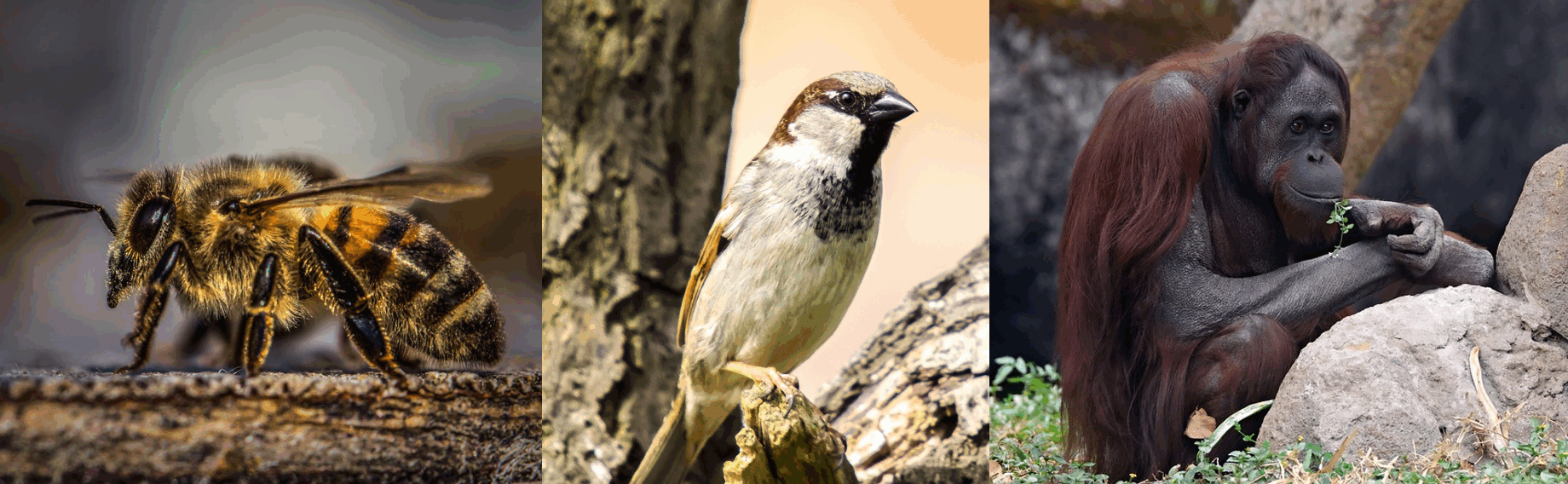
Pills, creams, herbal teas – we use a variety of ways to treat diseases, infections and stay healthy. But did you know that also non-human animals use medication to treat existing maladies or as a preventive treatment? From insects to birds to great apes, different animals use plants, fungi, other animals or soil to protect themselves from parasites and pathogens, reduce inflammation and anxiety or even support reproduction.
What kind of medication do animals use?
Plans have evolved to produce a variety of chemicals to defend themselves against herbivores and pathogens and they are the most common medicine used by animals. For example, chimpanzees infected with intestinal worms chew on the inner part of the bark of the Vernonia amygdalina plant to extract its bitter juice full of chemicals toxic to worms. Woolly bear caterpillars use chemicals from their host plants to kill larvae of parasitoid flies that develop in their bodies. When given the ability to select their food from a variety of plant species and other feed, sheep, goats, horses, and cattle can effectively balance their diets and self-medicate.
Fungi can also be used as medicines. Honey bees bring mycelium (a root-like structure) of some mushrooms to their hives to reduce infection with deformed wing virus.
Medicinal compounds can also be found in animal bodies. Hooded pitohui birds obtain toxins that repel lice from their diet, most likely melyrid beetles. Some new research shows that chimpanzees may use insects to treat wounds.
Lastly, some animals use soil as medicine. Chacma baboons often eat soil rich in clay, sodium, and fine salts to calm an upset stomach. Soil is also often used by pregnant monkeys as a source of minerals.
When and how do animals use medication?
Both therapeutic and prophylactic medications can be applied in different ways.
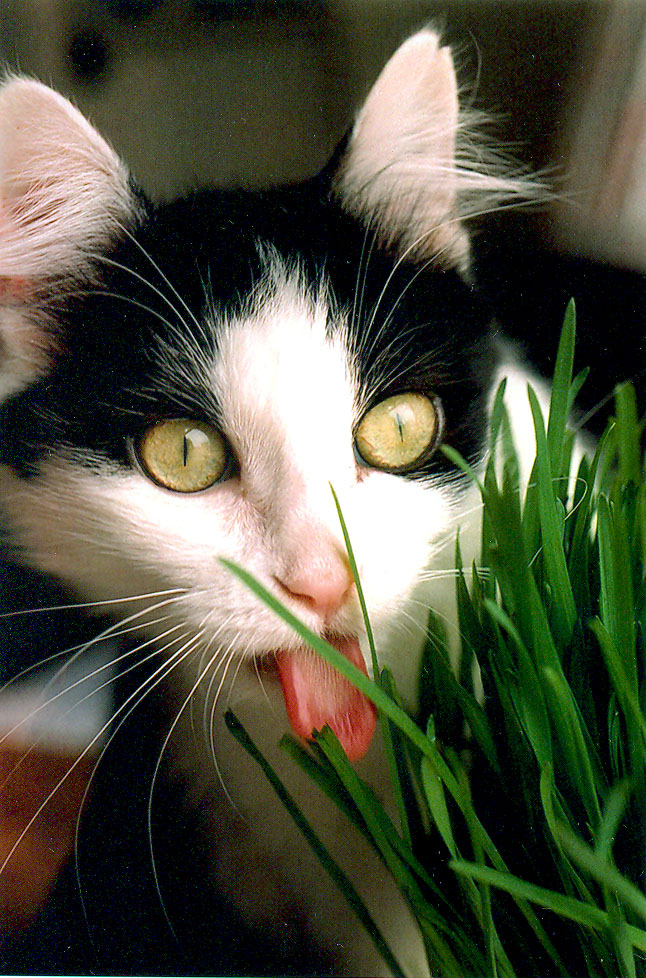
In addition to the benefits mentioned above of eating plants, animals or soil, animals can also ingest plants to physically rid themselves of infections. Chimpanzees swallow various hairy leaves whole to physically remove worms from their guts. This is likely one of the evolutionary reasons why cats and dogs eat grass. When provided with specific plants or plant extracts, cats and dogs can and will use them against bacterial infections or even anxiety. Plans can also be eaten preventively. Hamadryas baboons eat more berries known to have an antiparasitic effect if they live in areas with more parasitic schistosome worms.
Medication can also be applied externally. Some capuchin monkeys and lemurs bite into toxic millipedes to release irritating substances from their bodies that they rub into their fur to fight mosquitoes and parasites. A similar effect can be achieved by cats rubbing against and rolling in catnip and silver vine. Catnip contains substances that repel mosquitoes and other insects, very useful for animals that spend a lot of time moving slowly or standing still when hunting. Orangutans mix leaves of some lianas with saliva to help heal wounds.
Another form of medication is fumigation – the use of aromatic materials to fend off parasites. To this effect, wood ants bring conifer resin into their nest to reduce microbial infections. Honey bees mix tree resin with wax to produce propolis that is effective against mites, bacteria and viruses. House finches and house sparrows may incorporate cigarette buds into their nest to protect themselves and their chicks. Nicotine and other toxic substances repel or even kill parasites such as ticks, mites and fleas. However, this medication has serious side effects. Birds with more cigarette material in their nests have more DNA damage that potentially leads to cancer.
How do animals know how to medicate themselves?
As shown above, a variety of animals use medication, and we know that high cognitive skills are not needed for this behaviour. In some cases, the ability to use medication is innate. For example, in the woolly bear caterpillars mentioned infection by fly larvae activates specific receptor and caterpillars develop a stronger taste for medicinal chemicals. In general, animals may instinctively look for bitter-tasting plants when not feeling well, as a bitter taste is a common feature of medicinal plants.
Animals also tend to be less picky when it comes to food when not feeling well. If they eat items that they would not otherwise eat and feel better afterwards, they can learn to associate specific plants with medicinal effects. For example, sheep can learn that eating food with a high concentration of tannins brings relief from worm infection. They will later choose such food when infected.

And animals can also learn from each other. Lambs can learn from their mothers what plants to eat. Young chimpanzees copy the leaf-swallowing behaviour from their mothers. Interestingly, various groups of chimpanzees develop cultural differences in how leaves are folded and swallowed.
What can we learn from animals?
While we as humans have undoubtedly developed amazing medicines, many traditional and even modern drugs were discovered by watching animals use them. For example, bear behaviour led to the production of aspirin. This drug is based on salicylic acid from willow bark. Bears use bark to treat inflammation, which was copied by human healers and later the pharmaceutical industry developed it into a pill.
Recently, researchers studying cat behaviour filed a new patent for a mosquito repellant based on chemicals from catnip and silver vine.
Cattle that are allowed to graze freely on a variety of plants can not only self-medicate but also eat less and emit less greenhouse gases. They also need fewer antibiotics, which reduces the risk of the evolution of drug-resistant bacteria. Allowing for more natural behaviours in farm animals could lead to more sustainable agriculture.
These are just some examples of how animals use medication, and the practice is widespread in the animal kingdom. Fascinating examples are being constantly (re)discovered, and hopefully they will inspire us to learn from and protect nature instead of only exploiting it.
Sources:
de Roode, J.C. & Huffman, M.A. “Animal medication” Current Biology 34 (2024), R795-R815
Kozielska-Reid, M.A. “Did you know that birds use cigarette butts to fight parasites?”
Kozielska-Reid, M.A. “Do chimpanzees use insects to treat their wounds?”
Uenoyama, R., Miyazaki, T., Hurst, J.L., Beynon, R.J., Adachi, M., Murooka, T., Onoda, I., Miyazawa, Y., Katayama, R., and Yamashita, T. Sci. Adv. 7, eabd9135 (2021). “The characteristic response of domestic cats to plant iridoids allows them to gain chemical defense against mosquitoes”.
Cat eating grass photo by Nancy Wong – Own work, CC BY-SA 3.0, https://commons.wikimedia.org/w/index.php?curid=31449483